Cannabis in Siem Reap :The Complete Guide
Siem Reap — Cambodia’s UNESCO-listed temple city — is famous for the ancient grandeur of Angkor Wat, its buzzing Pub Street nightlife, and tuk-tuk rides through jungle-draped ruins. But for decades it has also held a quieter, stranger reputation among backpackers: as one of Southeast Asia’s most relaxed destinations when it comes to cannabis. Weed in Siem Reap
The reality, as always, is more nuanced than travel forum mythology suggests. Cannabis is firmly illegal in Cambodia. Enforcement is inconsistent but real. And the gap between what tourists casually experience and what the law actually says can land visitors in genuinely difficult situations. This guide cuts through the noise with factual, up-to-date information on every dimension of the topic. Weed in Siem Reap
Section 01
Weed Laws in Siem Reap
Cambodia’s cannabis law is rooted in the 1996 Law on Control of Drugs, which classifies cannabis as a Category I narcotic. This prohibits cultivation, possession, use, sale, and trafficking except for authorized medical or scientific purposes. Both recreational and medical use remain prohibited for the general public as of 2025. Weed in Siem Reap
| Offense | Quantity | Penalty | Severity |
|---|---|---|---|
| Personal possession / use | Under 1 gram | Up to 1 year prison + ~$500 fine | Moderate |
| Personal possession | Over 10 grams | Up to 5 years imprisonment | Serious |
| Trafficking / sale | Any amount | 5–10 years + heavy fines | Severe |
| Large-scale trafficking | Large quantity | Life imprisonment (rarely applied) | Extreme |
| Use as food ingredient | Culinary context | Grey area; rarely enforced | Low risk |
Importantly, foreign nationals are subject to the same penalties as Cambodian citizens. Documented arrests have led to detention without bail and potential deportation after serving a sentence. In 2023, Prime Minister Hun Manet publicly reiterated that Cambodia does not support cannabis legalization, signaling that legal reform is not imminent. Weed in Siem Reap
Critical note on enforcement: Enforcement is described officially as “opportunistic.” Police may confiscate small quantities and demand informal payments rather than pursuing formal charges — but this is not guaranteed, and bribery interactions carry their own risks. Do not assume informal tolerance means safety. Weed in Siem Reap
Section 02
Local Attitudes Toward Cannabis
Cambodian attitudes toward cannabis are layered and historically complex. Cannabis (known locally as kânâchaa) was likely introduced to Southeast Asia around the 16th century and was used for centuries as a medicinal herb and culinary ingredient in traditional Khmer cooking — particularly in soups, curries, and rice dishes. It was woven into everyday rural life long before Western drug categorizations applied.
By 1961, Cambodia technically made cannabis illegal under the UN Single Convention on Narcotics. But the law remained largely unenforced through subsequent decades. It was only in 1992, during a United Nations peacekeeping intervention, that the prohibition was specifically tightened — though still with minimal consistent enforcement. Weed in Siem Reap
🧑🌾
Rural / Older Cambodians
Many older Cambodians view cannabis as an unremarkable cooking herb — a traditional flavoring ingredient, not a drug. Stigma is relatively low in rural contexts. Weed in Siem Reap
🏙️
Urban / Younger Generation
Younger urban Cambodians are more aware of the legal classification. Some are cautious; others are casual about it. Western-influenced cannabis culture has grown in cities. Weed in Siem Reap
👮
Law Enforcement
Police attitudes vary significantly by location. Siem Reap authorities have at times adopted a stricter stance than Phnom Penh toward public use — particularly as the city works to curate its tourist image. Weed in Siem Reap
🧳
Tourist Industry Workers
Tuk-tuk drivers, guesthouse staff, and restaurant workers in tourist areas are often openly aware of visitor interest and may facilitate access — though this comes with its own risks. Weed in Siem Reap
Section 03
Cannabis Culture in Siem Reap
Siem Reap’s cannabis culture is inseparable from its broader backpacker travel scene, which exploded in the 1990s alongside Cambodia’s opening to international tourism. The city sits at a peculiar crossroads: it’s the gateway to one of the world’s great ancient wonders, a low-cost party destination, and a place where the informal economy has long been more influential than official policy. Weed in Siem Reap
The centerpiece of Siem Reap’s cannabis scene is the iconic “Happy” restaurant — an institution that stretches back decades. These establishments serve food and drink infused with cannabis, operating in a grey zone that has historically been tolerated due to tourist demand and the economic importance of the hospitality industry. “Happy” pizzas, shakes, and other dishes have been part of the Siem Reap experience for so long they have become almost clichéd in travel culture. Weed in Siem Reap
🍕 The “Happy Pizza” Tradition
Happy pizza restaurants openly advertise cannabis-infused menus, typically using cannabis as a sprinkled “herb” on pizzas or blended into shakes and other dishes. They operate by exploiting the traditional culinary use of cannabis — a legal grey area that authorities have historically tolerated. Weed in Siem Reap
- Quality varies enormously between establishments — from seeds-and-stems disappointment to notably potent product
- Staff are usually upfront about what “happy” means and will often discuss amounts and options openly
- The experience is more communal and restaurant-based than secretive — it’s woven into the social dining scene
- Edibles take significantly longer to take effect than smoking — a common source of overconsumption mistakes
Beyond happy restaurants, cannabis culture in Siem Reap operates through guesthouses, informal social networks, and certain bars that cater to cannabis-friendly visitors. There are no openly licensed cannabis dispensaries equivalent to those in legal markets — everything operates informally and under the constant background risk of enforcement. Weed in Siem Reap
Section 04
How People Access Cannabis in Siem Reap
Travelers in Siem Reap who seek cannabis most commonly encounter it through the following informal channels. It is important to understand that all of these operate outside the law, regardless of how normalized they may appear in tourist contexts. Weed in Siem Reap
🍕
Happy Restaurants
The most widely known and relatively low-confrontation route. Restaurants openly serve infused food and drink. No street dealing involved. Primarily an edibles experience. Weed in Siem Reap
🛺
Tuk-Tuk Drivers
Many tuk-tuk drivers around the tourist areas are approached by or proactively offer connections to cannabis. Common but higher-risk than happy restaurants. Weed in Siem Reap
🏨
Guesthouses & Hostels
Budget guesthouses in backpacker zones sometimes facilitate access or look the other way on consumption on premises. Highly variable by establishment. Weed in Siem Reap
🤝
Social Networks
Word of mouth among travelers, expat communities, and hostel common rooms. The least formal route and the most dependent on trust and luck. Weed in Siem Reap
Risk warning: Interacting with unknown dealers on the street carries significantly higher risk than any of the above — including scams, poor-quality product, and police involvement. Being proactively approached on the street with cannabis offers is a common tourist trap in Cambodia. Weed in Siem Reap
Section 05
Legal Alternatives in Siem Reap
For visitors who want a relaxed or altered-state experience without the legal risks associated with cannabis, Siem Reap offers a range of entirely legal options that are genuinely excellent. Weed in Siem Reap
🍺
Alcohol
Angkor Beer and Tiger Beer are cheap and widely available. Cocktail bars abound on Pub Street. Alcohol is legal, easily accessible, and central to Siem Reap’s nightlife culture. Weed in Siem Reap
☕
Kratom
Kratom (a plant with mild stimulant and sedative properties) exists in a legal grey area in Cambodia and is available in some herbal shops. Effects and legality vary by quantity and form. Weed in Siem Reap
🌿
CBD Products
CBD oils and products with low THC content can sometimes be found in health or wellness shops, particularly in Phnom Penh. The legal status is ambiguous; seek products explicitly labeled as THC-free. Weed in Siem Reap
🧘
Wellness & Meditation
Siem Reap has a thriving yoga, meditation retreat, and wellness spa scene — particularly around the Wat Bo and Sala Kamreuk neighborhoods. A genuinely excellent alternative for relaxation and altered perspective. Weed in Siem Reap
Section 06
Events & Cannabis-Friendly Atmosphere
Siem Reap doesn’t have overt cannabis events in the way that legal-market cities like Amsterdam or Denver do. However, the city’s general social atmosphere — particularly in its backpacker zones — is notably relaxed and tends to attract a cannabis-friendly crowd of international travelers. Weed in Siem Reap
🎵
Pub Street & Environs
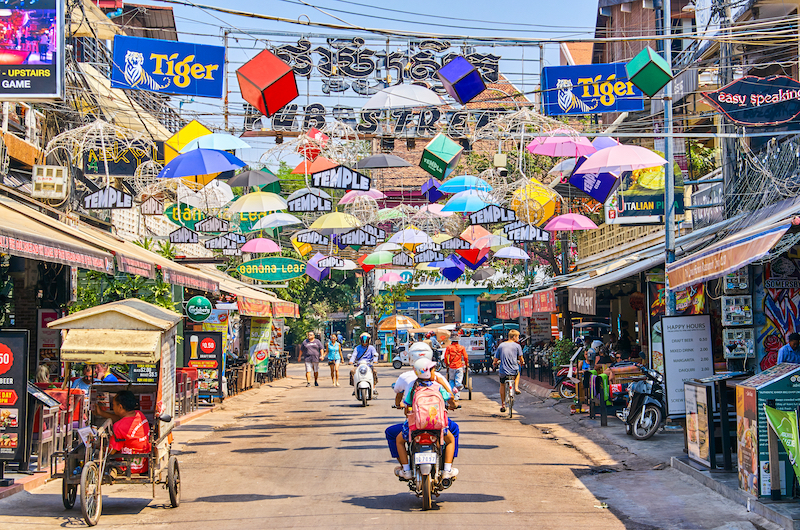
The central Pub Street area hosts bars with live music, cheap drinks, and a young international crowd. The nightlife is lively, free-spirited, and informally tolerant of various substances.
🌕
Full Moon Gatherings
Informal full moon events and parties occur periodically in Siem Reap, often organized through hostels and guesthouses. These attract travelers open to alternative social experiences.
🏛️
Angkor Wat Sunrise
A long-standing traveler tradition involves visiting Angkor Wat at sunrise in various states of mind. The experience of the ancient temples at dawn is genuinely extraordinary regardless of substances.
🎭
Apsara Dance Shows
Traditional Khmer dance performances in atmospheric restaurant settings offer a vivid, sensory evening experience that many travelers find memorable.
The JAH Bar in Siem Reap has been noted by travelers as a cannabis-friendly venue with live music and a relaxed vibe. The scene shifts over time, so current traveler communities and platforms are the best source for what’s open now.
Section 07
Safety Tips for Cannabis in Siem Reap
If you are going to make informed personal choices about cannabis in Siem Reap, the following harm-reduction and safety information is important to understand.
- 1 Never carry cannabis in public. Even small amounts found on your person during any police interaction create significant legal exposure. Consume on private premises and leave nothing on you when moving around the city.
- 2 Go slow with edibles. Happy pizza and cannabis-infused food takes 45–90 minutes to take full effect. Overconsumption is the most common mistake visitors make. Start small and wait.
- 3 Stick to established venues. Happy restaurants and guesthouses with long-standing reputations carry lower risk than street dealers or unknown contacts. Quality is also far more predictable.
- 4 Avoid drawing attention. Loud, visibly intoxicated behavior in public is a fast path to police attention anywhere. Low-key and private is always safer in Cambodia.
- 5 Never cross borders with cannabis. Transport of cannabis products across Cambodia’s borders — including to Thailand, Vietnam, or Laos — is an extremely serious offense in all those countries. Absolutely do not attempt it.
- 6 Understand bribery risks. If stopped by police, “informal resolution” via a payment may be offered — but this is legally uncertain, could escalate, and is not a guaranteed outcome. Do not assume it will always be available or affordable.
- 7 Keep your accommodation details accessible. If you’re using cannabis and become disoriented, having your hotel card or address in your pocket makes it easy to get home safely.
- 8 Know your own reaction to cannabis. If you have anxiety, a history of psychosis, or haven’t used cannabis recently, edibles especially can produce overwhelming experiences. Be self-aware and don’t use alone in an unfamiliar environment.
Section 08
Where People Find Cannabis in Siem Reap
Given the legal context, this section provides factual information about where cannabis has historically been most accessible in Siem Reap — primarily through the “happy” restaurant and hospitality scene — rather than a directory of specific vendors, which would change frequently and could expose individuals to harm.
📍 The Tourist Zones
Cannabis in Siem Reap is overwhelmingly concentrated in the city’s main tourist districts:
- Pub Street & Old Market Area (Psar Chas): The densest concentration of happy restaurants and tourist bars. Multiple establishments openly advertise “happy” menus.
- Sivatha Boulevard: The main commercial strip connecting tourist areas hosts various restaurants and guesthouses where happy menus are known to exist.
- Wat Bo Neighborhood: A quieter, more residential area popular with longer-stay travelers that has a number of cannabis-friendly guesthouses.
- Around Angkor Night Market: The area around the night market has several restaurants catering to tourists that include happy options on their menus.
Travelers consistently note that finding happy restaurants requires nothing more than a short walk around Pub Street and looking for menus that explicitly advertise “happy pizza,” “happy shakes,” or “special menus.” Tuk-tuk drivers stationed near major hotels and the airport area frequently offer to take visitors to such establishments or facilitate connections — though, as noted, these interactions carry higher risk than going directly to established restaurants.
Do not seek out street dealers. Unsolicited cannabis offers on the street in Siem Reap are often scams or police stings. The informal happy restaurant scene is both safer and more culturally authentic than any street-level interaction.
Section 09
Frequently Asked Questions
Is weed legal in Siem Reap or Cambodia?
No. Cannabis is illegal in Cambodia under the 1996 Law on Control of Drugs and remains prohibited for recreational and medical use as of 2025. Enforcement is inconsistent, particularly in tourist areas, but the law is real and the penalties are significant.
What is “happy pizza” and is it legal?
Happy pizza is pizza (or other food) infused with cannabis, served by restaurants that have long exploited a grey area around the culinary use of cannabis as an herb. Technically, even this falls under the cannabis prohibition, but these establishments have historically operated with minimal enforcement due to tourist demand. The situation can change, and it is not officially legal.
Will I get arrested for having a small amount of weed?
Possibly. Enforcement is described as “opportunistic” — police may ignore small amounts, demand an informal payment, or pursue formal charges. There is no guarantee of any particular outcome. Foreign tourists have been arrested for possession. The risk is real even if it’s not the most common experience.
Is Siem Reap more or less strict than Phnom Penh?
Expat communities note that Siem Reap has at times been stricter in practice than Phnom Penh — local authorities in Siem Reap have periodically pursued a more controlled image for the tourist city. Enforcement varies over time and is not predictable.
Can I smoke weed at Angkor Wat?
No. Angkor Wat is a sacred, UNESCO-listed heritage site with site security. Smoking anything at the temple complex is prohibited, and cannabis use at such a high-profile location would represent extremely poor judgment legally and culturally. This is firmly inadvisable.
What happens if I’m caught with cannabis by police?
Outcomes range from an informal “fine” (bribe) to formal arrest, detention, and prosecution. Foreign nationals face the same legal penalties as Cambodians, with the additional possibility of deportation after any sentence served. Do not assume any particular outcome.
Can I bring weed from Cambodia to another country?
Absolutely not. Cross-border transport of cannabis is treated as trafficking and carries severe penalties in Cambodia and in all neighboring countries (Thailand, Vietnam, Laos, Myanmar). This is one of the most serious mistakes a traveler can make in Southeast Asia.
Is cannabis culture going to change in Cambodia soon?
Not imminently. In 2023, Prime Minister Hun Manet explicitly stated Cambodia does not support cannabis legalization. Unlike Thailand, which pursued a controversial near-legalization before course-correcting, Cambodia shows no current signs of reforming its cannabis laws.
Are there CBD products available legally?
Some CBD products exist in health and wellness shops, particularly in Phnom Penh. The legal status of CBD in Cambodia is ambiguous. Products explicitly marketed as containing zero THC carry lower risk, but no CBD sale is officially sanctioned under current law.
This guide is intended for informational and harm-reduction purposes only. Cannabis is illegal in Cambodia. Laws and enforcement can change without notice. Travelers should make fully informed decisions, understand the risks, and prioritize their own safety and legal standing. This post does not encourage illegal activity.Cannabis in Siem Reap: The Complete Guide
Informational resource for travelers · Updated 2025
Laws change. Enforcement varies. Always verify current conditions before traveling.
This document does not constitute legal advice.