
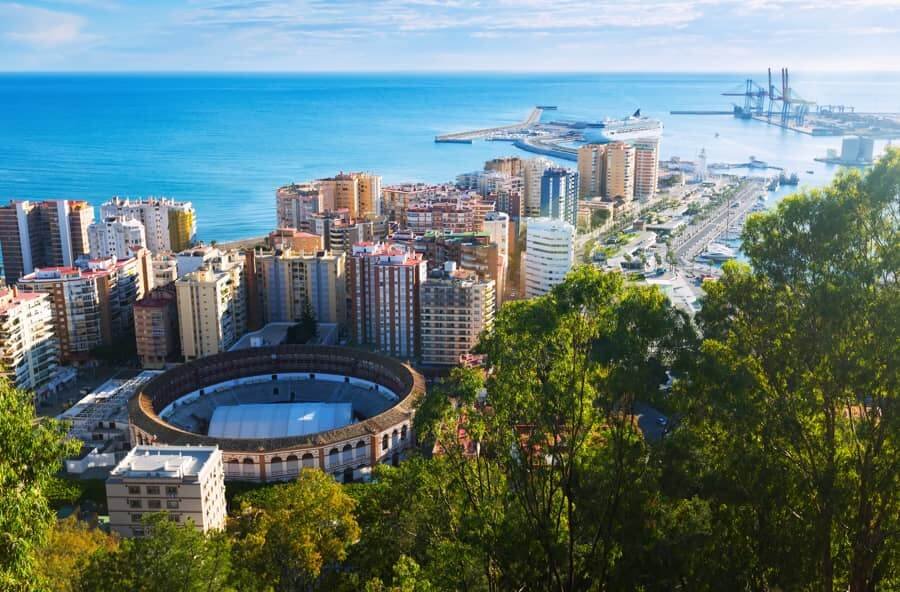
Perfect Weed Guide in Málaga
La Costa del Sol — where the sun never stops shining
Málaga · Andalusia · Kingdom of Spain Weed in Málaga
The definitive guide to cannabis laws, culture, cannabis social clubs, access, harm reduction, and the best legal alternatives in the capital of Spain’s sun-soaked Costa del Sol — a city with a surprisingly rich and nuanced cannabis landscape. Weed in Málaga
Legal StatusGrey Zone Weed in Málaga
Private UseDecriminalised
Public Use€300–€30K Fine
Read Time~14 Min
ℹ
Context Note: Málaga operates under Spain’s national cannabis framework — personal use is decriminalised in private spaces, cannabis social clubs exist, and CBD is legal. This guide is sharply different from the Gulf city guides in this series. Real risks remain, especially in public spaces and for tourists without club access — read carefully. Weed in Málaga
Table of Contents
- 01Weed Laws in Málaga
- 02Local Attitudes Toward Cannabis
- 03Cannabis Culture in Málaga
- 04How People Access Weed in Málaga
- 05Legal Alternatives in Málaga
- 06Events & Weed-Friendly Atmosphere
- 07Safety Tips
- 08Frequently Asked Questions
01 — Laws
Weed Laws in Málaga
Málaga is the capital of Málaga province in Andalusia, southern Spain. As with all Spanish cities, cannabis law here is governed primarily by national legislation — with Andalusia’s regional parliament and Málaga’s municipal government adding additional layers for local enforcement. Understanding this three-tier legal structure is essential to navigating cannabis in the city accurately. Weed in Málaga
Spain’s approach to cannabis is one of Europe’s most nuanced: a product of deliberate decriminalisation in the 1980s, refined through subsequent public security legislation. The result is a system that neither fully prohibits nor fully permits cannabis — creating a genuine grey zone that requires careful navigation, particularly for tourists unfamiliar with how it works in practice. Weed in Málaga
The Core Legal Principle Spain’s Constitutional Court has consistently held that the state cannot criminalise behaviour that harms only the individual themselves. This underpins the decriminalisation of personal cannabis use. However, “decriminalised” does not mean “legal” — it means the act carries civil (administrative) penalties rather than criminal ones. Public use, supply, and trafficking remain separately regulated and carry far heavier consequences. Weed in Málaga
The National Legal Framework
Two statutes define the cannabis landscape nationally. The Spanish Penal Code (Articles 368–378) governs criminal drug offences — primarily trafficking, supply, and cultivation for commercial purposes. These carry custodial sentences. The Organic Law 1/1992 on the Protection of Public Security (amended and partially replaced by the 2015 “Ley Mordaza”) governs administrative drug offences — primarily public possession and consumption of small quantities. These carry civil fines. Weed in Málaga
Penalty Matrix
| Offence | Category | Penalty | Severity |
|---|---|---|---|
| Private possession — personal use | Decriminalised | No criminal penalty; confiscation at police discretion | Decriminalised |
| Private consumption in own home | Decriminalised | No penalty | None |
| Public possession (any quantity) | Administrative | Fine €301–€30,050 + confiscation | Medium–High |
| Public consumption | Administrative | Fine €301–€600 (minor infraction) | Medium |
| Possession near schools or youth centres | Administrative (aggravated) | Fine up to €30,050 | High |
| Supply / Trafficking (small scale) | Criminal | 1–3 years imprisonment + fines | Criminal |
| Trafficking (organised / large scale) | Criminal (aggravated) | 3–4.5 years + significant fines | Criminal |
| Cultivation for commercial sale | Criminal | 1–3 years imprisonment | Criminal |
| Cannabis DUI (driving) | Traffic Law / Criminal | Fine €1,000; licence suspension; criminal if accident | High |
The Andalusian Regional Layer
Andalusia’s regional government (Junta de Andalucía) has authority over certain public health and social matters. Andalusia has been slightly more conservative than Catalonia in its approach to cannabis social clubs — the regional authorities have historically been less permissive of club operations than the Catalan or Basque regional governments. However, the national legal framework still applies, and cannabis clubs operate in Málaga, albeit with more caution than their Barcelona counterparts. Weed in Málaga
Málaga Municipal Ordinances
Málaga city council has enacted local public-order ordinances that include provisions against drug use in public spaces. The historic centre (Centro Histórico), Soho district, La Malagueta beach, and the main tourist corridors are areas where municipal police (Policía Local) are most active in enforcing public consumption laws. The port area and Muelle Uno have seen periodic enforcement drives, particularly during the summer season when tourist numbers peak. Weed in Málaga
Cannabis Social Clubs — The Legal Grey Zone
Cannabis social clubs (asociaciones cannábicas) occupy a distinctive legal position in Spain. Courts have held that the collective cultivation and private distribution of cannabis among a closed group of adult members — for their personal use — falls outside the criminal trafficking provisions of the Penal Code, provided certain conditions are met. These clubs operate as private, non-profit associations registered under Spain’s Law of Associations. They are not legal shops; they operate in a grey zone where criminal prosecution has generally been avoided through careful compliance with judicial precedent. Weed in Málaga
Cannabis Club Legality — Key Conditions For a cannabis social club to operate within the grey zone of Spanish law, it must: (1) be a genuine private association with formal membership; (2) distribute only to members, never to non-members or the public; (3) not profit commercially from the activity; (4) cultivate an amount proportionate to members’ assessed personal needs; (5) prohibit on-site consumption in many interpretations; and (6) maintain complete privacy. Clubs that deviate from these conditions — particularly by admitting tourists on the spot or operating visibly — risk criminal prosecution of their managers and confiscation of all cannabis.
Driving Under the Influence
Spanish traffic law (Real Decreto Legislativo 6/2015) includes cannabis DUI provisions enforced by both the Guardia Civil on highways and municipal police in urban areas. Saliva testing is standard at roadside checkpoints across Andalusia, including on the roads between Málaga city, the Costa del Sol, and the airport. A positive result triggers an immediate fine of up to €1,000, mandatory licence suspension, and vehicle immobilisation. If any accident has occurred while impaired, criminal charges follow. There is no equivalent of a BAC threshold — any detectable THC in saliva is sufficient for a positive test result. Weed in Málaga
02 — Attitudes
Local Attitudes Toward Cannabis
Málaga’s population of approximately 580,000 is a cosmopolitan mix of native Malagueños, Andalusian nationals, a large and long-established international expat community (particularly British, German, and Scandinavian), digital nomads, university students, and a booming tourist population. Attitudes toward cannabis reflect this diversity — and have evolved significantly over the past two decades.
“Málaga is not Barcelona — the cannabis culture is quieter, more private, more traditionally Andalusian. But it is unmistakably present, particularly among younger residents and the international community.” Weed in Málaga
Traditional Andalusian Attitudes
Older and more traditional Malagueños tend to hold conservative views on cannabis — it is not a subject discussed openly in mixed company, and overt use in public spaces is viewed with disapproval. Andalusia has historically been one of Spain’s more socially conservative regions, and this shapes the baseline attitude. The Catholic Church retains cultural influence, and drug use — particularly more visible forms — carries residual social stigma among older generations. Weed in Málaga
Youth and University Culture
Málaga’s Universidad de Málaga has over 40,000 students, and the city’s growing tech and creative sectors have attracted a younger population with broadly European attitudes toward cannabis. Among the 18–35 demographic — particularly students, artists, and the digital nomad community that has grown significantly post-pandemic — cannabis is normalised at a social level. Use is common, discussion is casual among peers, and cannabis social club membership is seen as a pragmatic harm-reduction choice rather than a political statement.
The Expat Community
Málaga has one of Spain’s largest permanent expat communities — particularly in areas like El Palo, Pedregalejo, and the Soho district. British, German, Dutch, and Nordic expats bring the attitudes of their home countries, many of which have legalised or decriminalised cannabis. Within expat social circles, cannabis is often discussed openly and used without particular secrecy. This community has contributed significantly to the normalisation of cannabis in Málaga’s social landscape. Weed in Málaga
The Police Attitude
Málaga’s police forces — national Policía Nacional, local Policía Local, and Guardia Civil for surrounding areas — generally take a pragmatic rather than moralistic approach to minor cannabis infractions. Enforcement priorities are trafficking and supply, not individual consumption. Individual officers vary, but the administrative fine system creates an incentive for fines (revenue) rather than arrest, meaning tourists caught with small amounts in public are more commonly fined than detained. This should not be mistaken for tolerance — fines are real, confiscation is certain, and the encounter is at minimum inconvenient and potentially expensive. Weed in Málaga
The Generational Divide in Numbers Spain’s 2023 National Drug Plan survey found that approximately 9.5% of the Spanish population reported cannabis use in the past 12 months — one of Europe’s higher rates. Among 15–34 year olds, the figure rises to over 20%. Málaga’s profile — with its large university population and international community — likely sits at or above the national average. This context helps explain why public attitudes are considerably more relaxed than in cities of comparable formality. Weed in Málaga
03 — Culture
Cannabis Culture in Málaga Weed in Málaga
Málaga has a genuine, layered cannabis culture — not the absolute underground of Kuwait or Abu Dhabi, not the fully open café culture of Amsterdam, but something characteristically Spanish: relaxed in private, cautious in public, socially normalised among younger residents, and increasingly structured around the cannabis social club model. Weed in Málaga
Cannabis Social Clubs in Málaga Weed in Málaga
Málaga has a number of registered cannabis social clubs, the exact number of which fluctuates as clubs open, close, or restructure in response to legal pressures. These clubs range from small, informal associations of 30–50 members to larger organisations with dedicated premises and structured operations. They are concentrated in the city centre and the Soho/Arts district, as well as some residential neighbourhoods toward El Palo. Most clubs do not publicly advertise their existence. Weed in Málaga
Membership Requirements
How clubs work for residents
Members must be Spanish residents (often requiring a registered address — empadronamiento), be 18+, be referred by an existing member, and formally apply to join. The application process verifies the residential requirement. Once accepted, members receive a set quantity of cannabis monthly based on their declared personal-use needs — typically ranging from 30–60g depending on the club’s rules. This is deducted from their allocation, not purchased in a traditional retail sense. Weed in Málaga
Tourist Access — Reality Check
What visitors actually face
Most reputable Málaga cannabis clubs will not admit tourists without a Spanish residency registration, regardless of what you may have read about Barcelona clubs. Clubs that admit tourists casually are operating outside the legal grey zone and face higher prosecution risk. Some clubs close to the university area or with younger management may be more informal about this — but walking in off the street and asking to join as a visitor is both unlikely to succeed and potentially involves you in a club with less legal standing. Weed in Málaga
Social Dynamics
The atmosphere inside legitimate clubs Weed in Málaga
Legitimate Málaga cannabis clubs typically have a lounge-style space with comfortable seating, sometimes a terrace, music, and a genuinely social atmosphere. Think private members’ bar rather than coffee shop. Members bring their own devices or use club-provided facilities. The atmosphere is relaxed, adult, and community-oriented. Clubs with this character are the most legally secure, because the private membership model is precisely what judicial precedent protects. Weed in Málaga
Product Quality and Variety
What clubs typically provide
Clubs cultivate cannabis themselves (legally, for member personal use) or source from member-cultivators within the association. Product quality in reputable clubs is typically significantly better than street-level cannabis — tested, labelled with strain names and cannabinoid percentages, and free of the dangerous adulterants that plague street markets. Variety at established clubs can include multiple strains, concentrates, and increasingly edible preparations. Weed in Málaga
The Street and Beach Scene
Beyond the club system, cannabis circulates informally through social networks among residents and tourists — particularly in beach neighbourhoods like La Malagueta, Pedregalejo, and El Palo, and in the student bars of the Centro Histórico and El Perchel. The beach culture in summer, with its long evenings, chiringuitos (beach bars), and informal social mixing, creates an environment where cannabis is present but kept at a low profile from police view. Weed in Málaga
Soho — Málaga’s Arts District
The Soho district, centred on Calle Arte and the area around the CAC contemporary art museum, is Málaga’s most internationally minded and culturally progressive neighbourhood. Street art, independent galleries, creative studios, and alternative bars make it the closest thing Málaga has to a bohemian district. Cannabis culture is most visible here at a social level — not in any open public consumption sense, but in the normalised attitudes of the community and the social spaces they occupy. Weed in Málaga
Safety Note on Street Cannabis Quality As throughout the Costa del Sol tourist circuit, street-level cannabis in Málaga can be adulterated with synthetic cannabinoids, glass particles, sand (added to increase weight), or diesel. This is not universal — much cannabis in private circulation is genuine — but a tourist buying from a street contact with no prior relationship has no way to verify quality. The cannabis social club system, where it is accessible, solves this problem. The street market does not. Weed in Málaga
04 — Access
How People Access Weed in Málaga
Access to cannabis in Málaga happens through several distinct channels, each with different risk profiles, quality outcomes, and legal implications. Understanding these differences is the core of harm reduction in this context.
Risk Framework Unlike the Gulf city guides, the risk discussion here is not binary (prison vs. no prison). Instead, it covers fines and confiscation (public use), quality and safety risks (street sources), legal standing risks (club access), and criminal risk (trafficking quantities). The spectrum is nuanced — understand where you sit on it. Weed in Málaga
Cannabis Social Clubs — The Best Route for Residents
For people who live in Málaga, the cannabis social club system represents the clearest access route with the best quality assurance, lowest health risk, and most defensible legal position. Membership requires time, a Spanish address registration, and a referral — these barriers exist precisely because the legal protection of the model depends on genuine private membership. Residents who invest in club membership consistently report it as the best option in the city. Weed in Málaga
Social Networks — The Most Common Tourist Route
For visitors, the most common access route is through social connections — other travellers, hostel contacts, bar staff, or local acquaintances made during the trip. This informal network is how most tourist cannabis consumption in Málaga is sourced. The legal risk is possession in a private space (minimal criminal risk), but the quality assurance is zero — you are entirely reliant on the honesty of your source about what you are actually consuming. Weed in Málaga
Street Dealers
Street-level dealing occurs in Málaga, predominantly in certain areas of the historic centre, around the bus and train stations (Alameda Principal corridor), and occasionally on popular beach stretches. As discussed above, the health risk from adulteration is the primary concern with street cannabis in any Spanish tourist city. Legal risk involves being caught in a public space immediately after purchase — both parties potentially facing administrative fines for the transaction. Weed in Málaga
Comparison of Access Routes
Cannabis Social Club
✓Best quality assurance — tested, labelled product
✓Most legally defensible position for members
✓Social community environment
✗Requires Spanish residency registration
✗Requires existing-member referral
✗Not accessible to most short-term tourists
Street / Social Network
✓Accessible without formal registration
✓Available throughout city neighbourhoods
✗Zero quality assurance — adulterants possible
✗Higher public exposure and fine risk during purchase
✗Street sources may involve other crimes
✗Synthetic cannabinoid contamination documented in region
Bringing Cannabis to Málaga
Travellers arriving at Málaga-Costa del Sol Airport (AGP) by international flight are subject to Spanish customs checks. Bringing cannabis from abroad — including from countries where it is legal, such as Germany or the Netherlands — constitutes importation, a criminal offence under the Spanish Penal Code, not a mere administrative infraction. Customs at AGP does conduct checks, particularly on flights from Amsterdam, Frankfurt, and other European hubs. The risk is categorically higher than local street possession. Weed in Málaga
05 — Alternatives
Legal Alternatives in Málaga
Málaga is one of the most enjoyable cities in Europe on purely legal terms — the food, wine, culture, beaches, and social scene are world-class without any augmentation. The alternatives below represent the richness of the city’s legitimate offer. Weed in Málaga
🍷
Málaga Wine & Tapas
Málaga has its own PDO wine designation — sweet Málaga wines (Málaga DO) are produced in the Axarquía hills nearby. The city’s tapas culture is exceptional: traditional bodegas like El Pimpi, Casa Aranda, and Antigua Casa de Guardia offer authentic experiences in beautiful historic settings. Weed in Málaga
🎨
Museums & Culture
The Picasso Museum Málaga (birthplace of Pablo Picasso), the Carmen Thyssen Museum, the CAC contemporary art centre, the Pompidou Centre Málaga — the city has become one of Europe’s most impressive secondary museum cities. The Alcazaba Moorish fortress and the Roman Theatre add historical depth. Weed in Málaga
🏖️
Beaches & Chiringuitos
La Malagueta urban beach, the coves toward El Palo, and the sweeping sands of Torremolinos are all within easy reach. The chiringuito culture — grilled espetos (sardine skewers), cold Mahou, and Mediterranean evenings — is one of Andalusia’s great pleasures.
🌿
CBD Products
CBD products under 0.2% THC are legal in Spain. Specialist CBD shops operate in Málaga city, particularly in the Soho district and near the university area. CBD oils, flowers, edibles, and cosmetics are available without legal risk — a genuinely different landscape from the Gulf guides in this series. Weed in Málaga
🏔️
Natural Park Hiking
The Montes de Málaga Natural Park is on the city’s doorstep. El Caminito del Rey gorge walk is one of Spain’s most dramatic hikes. The Serrania de Ronda and the villages of Grazalema offer genuinely spectacular walking and a profound natural contrast to the coast.
🎭
Nightlife & Music
Málaga’s nightlife centres on the Plaza de la Merced, Calle Larios, and the Soho area. Flamenco shows at traditional tablaos offer authentic Andalusian culture. The summer concert season at La Rosaleda and various outdoor venues brings major international acts to the city.
🚢
Day Trips & Excursions
Ronda (historic cliff city), Granada and the Alhambra, Nerja’s caves and beach, Antequera’s dolmens — Málaga’s central Costa del Sol position makes it one of Spain’s best bases for regional exploration by train, bus, or car. Weed in Málaga
☕
Café & Terrace Culture
Málaga’s café culture is world-class. From traditional coffee bars in the Mercado de Atarazanas area to third-wave specialty cafés in the Soho district, the city offers exceptional coffee experiences. The terrace culture — outdoor tables at nearly every establishment — is central to Málaga’s social rhythm. Weed in Málaga
🛥️
Sailing & Water Activities
Málaga’s port area (Puerto de Málaga) offers sailing trips, whale and dolphin watching toward the Strait of Gibraltar, and a growing selection of water-sports experiences. The Blue Flag beaches have all the standard Mediterranean water-sports infrastructure.
CBD in Málaga — Practical Guide CBD shops have proliferated in Málaga over the past five years, particularly in the Soho district (around Calle Casas de Campos and adjacent streets) and near the university. Products are generally well-labelled with lab certificates confirming THC content. Spanish law requires products to contain under 0.2% THC. CBD hemp flowers — sold as “aromatherapy” or “collector’s items” — exist in a slight regulatory grey zone but are widely sold and rarely subject to enforcement. Bringing compliant CBD products to and from Spain poses no legal issue under EU free movement principles, though take care when transiting through non-EU countries.
06 — Events
Events & Weed-Friendly Atmosphere
Málaga has no explicitly cannabis-friendly events — cannabis club events are private by definition, and no public cannabis festivals currently operate in the city. However, several events and spaces create social environments where cannabis is more culturally present than average, and the city’s overall relaxed southern European atmosphere makes cannabis-related conversation and culture more accessible than in most European cities.
Semana de la Música (Music Week) and Summer Festivals
Málaga’s summer music calendar includes outdoor concerts at La Rosaleda football stadium, the annual Starlite Marbella (30 minutes away) for major international acts, and a variety of smaller festival formats across the province. Large music events attract the demographics most associated with cannabis culture in Spain — young adults, international tourists, and university students. Enforcement at music festivals in Andalusia tends to focus on dealing rather than personal use, though visible public consumption does still attract police attention. Weed in Málaga
Soho Arts District Social Scene
The Soho neighbourhood hosts regular gallery openings, street art events, and the annual Málaga Street Art festival (MAUS). The creative community that gravitates to these events represents Málaga’s most progressive social scene. Cannabis is culturally present in this community at a private level, and the neighbourhood’s bars and social spaces create the most relaxed atmosphere for cannabis-adjacent conversation and culture in the city. Weed in Málaga
La Malagueta Beach Evening Culture
Málaga’s urban beach, La Malagueta, has a vibrant evening culture from May through October. The beach bars (chiringuitos), the informal groups of residents and tourists that gather at sunset, and the late evening gatherings toward the rocks at the eastern end of the beach create a social setting where cannabis is the most likely to be discreetly present. This is still public space — the fine risk is real — but the natural environment and lower police density compared to the city centre create a different risk calculus than, say, the Punta Ballena strip in Magaluf. Weed in Málaga
Feria de Málaga
The Feria de Málaga — held every August — is the city’s biggest annual festival: nine days of celebrations centred on the feria ground (recinto ferial) in the Cortijo de Torres area, plus the “feria de día” in the historic centre. It is one of Andalusia’s great popular festivals, with flamenco, horses, traditional dress, and extensive food and drink consumption. The scale of the festival — hundreds of thousands of people over nine days — makes it simultaneously an environment where cannabis circulates informally and one where police presence is substantial and focused on disorder prevention. Weed in Málaga
The Málaga Cannabis Community Málaga has a small but established cannabis advocacy community, partly centred around the social club network and partly around harm-reduction organisations. Events run by groups like FAC (Federación de Asociaciones Cannábicas) occasionally take place in Málaga — typically internal events for club members and advocates rather than public festivals. Following these organisations on social media (where they operate openly in Spain’s permissive information environment) provides the best visibility into the organised cannabis community’s calendar. Weed in Málaga
07 — Safety
Safety Tips for Cannabis in Málaga
- 01 Consume only in private spaces. The legal distinction in Spain between private and public use is fundamental. In your rented apartment, villa, or (depending on property rules) your hotel room, consumption is decriminalised. On the beach, in a park, on a terrace, or on the street, it is an administrative offence. The rule is simple: inside or genuinely private outdoor space (your own garden), not in any shared public or semi-public area.
- 02 Never drive after using cannabis. Saliva drug tests at Guardia Civil checkpoints on the A-7 (coastal motorway), N-340, and around Málaga Airport are common and effective. Any detectable THC is a positive result. The fine is up to €1,000, licence suspension follows, and criminal charges apply if any incident occurs. Ridesharing apps (Uber, Cabify) and taxis are abundantly available throughout Málaga and the Costa del Sol.
- 03 Prioritise quality — be cautious with unknown street sources. Synthetic cannabinoid contamination in tourist-area street cannabis is a documented health risk across the Costa del Sol. If you use cannabis sourced from unknown street contacts, be alert to unusual physical reactions (extreme agitation, rapid heart rate, confusion, seizures) that may indicate synthetic cannabinoids. Call 112 (European emergency number) immediately in a medical emergency — health services will not prioritise prosecution over patient safety.
- 04 Carry only personal-use quantities. While Spain has no statutory gram threshold defining personal use, context and quantity heavily influence police assessment. A few grams of cannabis in a personal pouch is treated differently from 50g in multiple bags, regardless of stated intent. Carrying quantities that invite a trafficking inference — even without that intent — creates a criminal law risk from what would otherwise be an administrative offence.
- 05 Know what to do if stopped by police. Police (Policía Local, Policía Nacional, or Guardia Civil) can stop you with reasonable grounds. If cannabis is found in a public space: stay calm, do not physically resist, ask for the officer’s identification and note their badge number. Administrative fines can be paid on the spot or contested within 30 days through the standard administrative process. You can request a copy of the fine documentation — this is your right. Legal aid organisations in Málaga can advise on contesting fines if the amount seems excessive.
- 06 Do not attempt to import cannabis through Málaga Airport. AGP handles substantial international passenger volume and customs checks are standard. Bringing cannabis from Germany, the Netherlands, or any other jurisdiction — regardless of its legal status at origin — is a criminal importation offence in Spain, not an administrative fine. The risk profile is categorically different from local possession.
- 07 Check your accommodation’s smoking policies. Many Málaga hotels and holiday apartments prohibit all smoking inside, with civil penalties for violations. Cannabis odour is detectable and staff may report it. Using a dry herb vaporiser in accommodation significantly reduces odour and the probability of a hotel incident. Always check the property’s specific rules — many Málaga vacation rentals via Airbnb and Booking.com have explicit no-smoking terms that include cannabis.
- 08 Understand that “decriminalised” doesn’t mean consequence-free. Administrative fines of €301–€600 for public consumption may seem minor in comparison to the Gulf city guides in this series — but they are immediately imposed, always include confiscation, appear on your Spanish administrative record, and unpaid fines can accumulate interest and become immigration complications for repeated visitors. The Ley Mordaza fines are real enforcement tools, not empty threats.
- 09 Long-term residents: consider cannabis club membership. If you live in Málaga or the Costa del Sol with a registered address (empadronamiento), investigating cannabis social club membership is a worthwhile harm-reduction investment. The quality assurance, legal framework, and social community of a reputable club represent a significantly better option than street sourcing on every dimension. Start by researching FAC-affiliated clubs, which operate under the highest standards of legal compliance.
- 10 Be aware of the tourist spike in enforcement during summer. Málaga’s tourist numbers peak between June and September. Policía Local presence in tourist areas — the Centro Histórico, La Malagueta beach, Muelle Uno, and Soho — is substantially higher during these months. The enforcement probability for public cannabis use is correspondingly higher in summer than in the quieter months. The same behaviour carries different practical risk levels depending on the time of year.
08 — FAQ
Frequently Asked Questions
Q Is cannabis legal in Málaga?
Not in the full sense of the word. Cannabis is decriminalised for personal private use in Spain — meaning there is no criminal penalty for consuming or possessing it in a private space. However, it is not legal: there are no licensed shops, public use is an administrative offence carrying fines of €301–€600, and trafficking remains a criminal offence. Cannabis social clubs operate in a grey zone protected by judicial precedent. The clearest summary: you cannot go to prison for having a small amount of cannabis for personal use in your Málaga apartment, but you can be fined for having it on the street, and the quality and legality of how you sourced it matter significantly.
Q Can I join a cannabis club in Málaga as a tourist? Weed in Málaga
In most cases, no — not easily or safely. Legitimate cannabis clubs in Málaga require Spanish residency registration (empadronamiento), a formal application, and typically an existing-member referral. These requirements exist precisely because the legal grey zone protecting clubs depends on their genuinely private, members-only character. Clubs that admit tourists casually are operating outside this protection and carry higher prosecution risk for both management and members. If you are visiting for an extended period and have a registered address, some clubs may consider a membership application — but this takes time and investment that most short-term tourists cannot make. For most visitors, club access is not a realistic option during a typical holiday stay. Weed in Málaga
Q How is Málaga different from Barcelona for cannabis?
Several ways. Barcelona has a larger, more established, and more internationally known cannabis club scene — including clubs that have historically been more permissive about tourist access (though this has tightened significantly following crackdowns since 2017). Catalonia’s regional government has been more actively engaged with cannabis policy than Andalusia’s, creating a slightly more permissive regulatory culture around clubs. Málaga is culturally more conservative than Barcelona in this specific respect — clubs are more discrete, less tourist-facing, and generally more strict about membership requirements. Both cities operate under the same national legal framework, but the practical implementation and club accessibility differ. Weed in Málaga
Q Is CBD legal in Málaga?
Yes. CBD products derived from hemp with under 0.2% THC are legal in Spain and available in dedicated shops in Málaga — particularly in the Soho district and near the university. CBD oils, capsules, topicals, edibles, and hemp flowers are all commercially available. Products should carry lab certificates confirming THC content. This is a genuine difference from the Gulf destinations covered elsewhere in this series. Note that while CBD flowers are widely sold in Spain as “collector’s items” or “aromatherapy,” their regulatory classification has some grey areas — the retail market is established but not without occasional local enforcement attention.
Q What happens if police stop me with cannabis in the street?
For personal-use quantities in a public space: you will receive an administrative fine (typically €301–€600 for consumption), the cannabis will be confiscated, and your identification will be recorded. You will not be arrested or taken into custody for this. The fine documentation will be given to you — keep it. You have 30 days to pay or formally contest the fine through the standard Spanish administrative tribunal process. Resisting, arguing, or failing to provide identification escalates the situation into a different legal category — comply calmly and exercise any challenge through the formal process afterward. Weed in Málaga
Q Is it safe to smoke on the beach in Málaga?
Legally, no — beaches are public spaces and the administrative fine for public cannabis use applies on the beach as much as anywhere else. Practically, enforcement varies significantly: Policía Local patrols are more concentrated on the city-centre stretch of La Malagueta than on quieter beach areas toward El Palo and Pedregalejo. Evening hours and quieter areas of beach carry lower enforcement probability than busy daytime locations near the city centre. However, “lower probability” is not zero probability, and the administrative fine is always a realistic outcome. Private accommodation remains the only genuinely safe option under Spanish law. Weed in Málaga
Q I’m from Germany where cannabis is partially legal — what are my rights in Málaga?
Germany’s 2024 Cannabis Act has no legal effect in Spain. Within Germany, the law permits adults to possess up to 25g in public and grow limited quantities at home. None of this translates across the border. In Spain, you are subject to Spanish law: public possession is an administrative offence (fine), private possession for personal use is decriminalised. Crucially, bringing cannabis from Germany to Spain is a criminal importation offence regardless of German legality. The one area of benefit: you cannot be prosecuted in Spain for what you did legally in Germany before your trip, though if your drug test comes back positive at a DUI checkpoint in Spain, the source of that cannabis is irrelevant to the charge. Weed in Málaga
Q Is Málaga considering further cannabis reform?
Nationally, Spain’s central government has discussed potential cannabis regulation frameworks that would create licensed dispensaries — similar to the Maltese or German models. These discussions have been on the political agenda of PSOE (Socialist Party) and Sumar (left-wing coalition) since 2022 but have not yet produced legislation. At the regional level, Andalusia is currently governed by the conservative PP (Partido Popular), which is not sympathetic to cannabis liberalisation. Local reform in Málaga is therefore unlikely in the near term ahead of any national framework. The existing grey zone — social clubs, decriminalised private use — is likely to remain the operative reality in Málaga for the foreseeable future. Weed in Málaga
Q What are the risks of synthetic cannabinoids (spice) in Málaga?
Synthetic cannabinoids are a genuine and documented harm in the Costa del Sol tourist cannabis market. They are chemicals that bind to the same brain receptors as THC but with significantly higher potency and much greater toxicity — causing extreme agitation, psychosis, seizures, and cardiac events in ways that natural cannabis essentially never does. They are used to adulterate or entirely replace cannabis in street-level supply because they are cheaper than cannabis and can be difficult to detect without testing. Hospital Universitario Virgen de la Victoria (Málaga’s main public hospital) has treated cases of synthetic cannabinoid poisoning. The risk is highest with street-sourced cannabis from unknown contacts, lower with long-established social network sources, and essentially absent within reputable cannabis social clubs. If you cannot access a club, sourcing through someone you have an established relationship with rather than a street vendor is the primary harm-reduction measure available. Weed in Málaga
✦ ✦ ✦
Málaga Cannabis GuideLegal Disclaimer This article is published for informational and harm-reduction purposes only. It does not encourage, condone, or facilitate any violation of Spanish law. While personal cannabis use is decriminalised for private consumption in Spain, public use remains an administrative offence and trafficking is a serious criminal offence. Spanish law applies to all visitors regardless of nationality or home-country cannabis laws. This guide does not constitute legal advice. Laws change — verify current regulations with qualified local legal counsel. If you face a legal situation in Spain, contact your country’s consulate and seek a Spanish-licensed lawyer. Weed in Málaga