
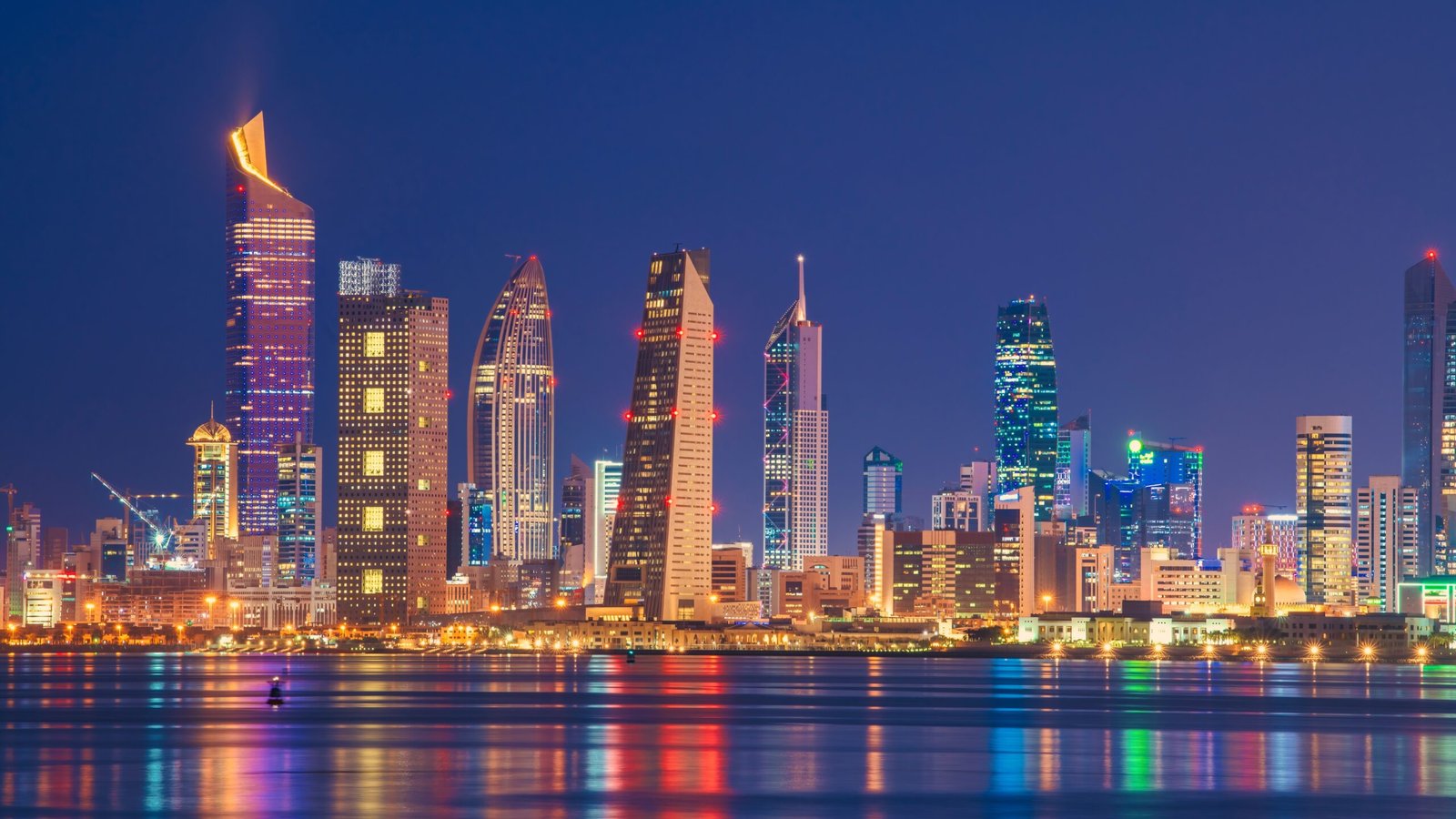
Weed Guide in Kuwait City
Kuwait City · State of Kuwait · Arabian Gulf
A comprehensive, unflinching guide to cannabis laws, culture, attitudes, harm reduction, and legal alternatives in one of the Gulf region’s strictest jurisdictions. Weed in Kuwait City
Legal StatusFully Illegal
Max PenaltyLife Imprisonment
Risk LevelExtreme
Read Time~13 Min
⚠Disclaimer: This guide is published for informational and harm-reduction purposes only. Cannabis is fully illegal in Kuwait. Nothing here constitutes legal advice or encouragement to violate Kuwaiti law. Consequences are severe and include imprisonment, deportation, and flogging. Weed in Kuwait City
Contents
- 01Weed Laws in Kuwait City
- 02Local Attitudes Toward Cannabis
- 03Cannabis Culture in Kuwait City
- 04How People Access Weed in Kuwait City
- 05Legal Alternatives in Kuwait City
- 06Events & Weed-Friendly Atmosphere
- 07Safety Tips
- 08Frequently Asked Questions
01 — Laws
Weed Laws in Kuwait City Weed in Kuwait City
Kuwait’s drug laws are among the strictest in the Arab world and the broader Middle East. Cannabis falls under Law No. 74 of 1983 Concerning Narcotic Drugs and Psychotropic Substances, which classifies it as a Schedule I narcotic with no recognised medical, industrial, or personal-use exceptions whatsoever. Kuwaiti law is enacted at the national level — Kuwait City, as the capital and largest city, is fully subject to these federal statutes with no local variation. Weed in Kuwait City
Critical Warning Kuwait is an Islamic state where Sharia principles inform civil and criminal legislation. Cannabis is doubly prohibited — by statute and by religious law. There is no medical cannabis programme, no CBD exemption, no decriminalisation framework, and no political movement toward any of these. The laws are enforced actively and without leniency toward foreigners. Weed in Kuwait City
The 1983 Narcotic Drugs Law Weed in Kuwait City
Law No. 74 of 1983 and its subsequent amendments govern all drug offences in Kuwait. Cannabis in all forms — flower, resin (hashish), oil, edibles, seeds, and CBD products — falls within its scope. The law distinguishes between personal consumption offences and trafficking, but even personal possession carries serious custodial sentences. There is no caution, civil fine, or diversion programme for first-time or small-quantity offenders. Weed in Kuwait City
Criminal Penalties
| Offence | Detail | Penalty | Level |
|---|---|---|---|
| Personal Possession | Any quantity | Up to 5 years imprisonment + fines | Very High |
| Personal Consumption | Proven by test or admission | Up to 3 years + mandatory rehabilitation | High |
| Possession with Intent | Above threshold quantities | 5–15 years imprisonment | Very High |
| Trafficking / Supply | Any quantity sold or transferred | 10 years to life imprisonment | Extreme |
| Importing / Smuggling | Any quantity across border | Life imprisonment | Extreme |
| Cultivation | Any scale | Up to 15 years imprisonment | Very High |
| Financing Drug Operations | Any involvement | Life imprisonment | Extreme |
Corporal Punishment
In addition to incarceration, Kuwaiti courts can sentence convicted drug offenders to corporal punishment (flogging) in accordance with Sharia-informed provisions. While the application of corporal punishment has varied in practice over the years, it remains a legally available sentence and has been imposed in drug cases. This applies to both nationals and foreign residents, though implementation can vary. Weed in Kuwait City
Deportation for Foreign Nationals Weed in Kuwait City
Any foreign national convicted of a drug offence in Kuwait is subject to automatic deportation upon completion of their sentence, with a permanent ban on re-entry. Kuwait has a very large expatriate population — roughly 70% of the total population — and drug enforcement is applied to expats as thoroughly as to Kuwaiti nationals. Loss of residency, employment, and income is an immediate consequence of arrest, often before conviction. Weed in Kuwait City
Drug Testing Powers Weed in Kuwait City
Kuwaiti law enforcement has broad authority to compel drug testing. This includes workplace testing (particularly in government and security sectors), testing at ports of entry, and testing of arrested individuals. A positive test for cannabis — even without physical possession at the time of arrest — is treated as evidence of consumption, which is itself a criminal offence. Cannabis metabolites remain detectable in urine for weeks after last use. Weed in Kuwait City
Legal Framework Note Kuwait’s legal system combines civil law (influenced by Egyptian and French models) with Islamic Sharia. Drug offences fall primarily under civil statute, but the underlying moral and religious framework means there is no cultural or judicial pressure toward leniency. Judges have limited discretion to go below minimum sentences, and rehabilitation alternatives to incarceration are reserved for first-time, small-quantity personal users only — and even then are rarely applied to foreigners. Weed in Kuwait City
Recent Legal Developments
Kuwait has periodically discussed drug law reform in the context of public health — primarily focused on addiction treatment infrastructure rather than decriminalisation. In 2023–2024, Kuwait’s National Assembly held discussions about improving drug rehabilitation facilities. None of these discussions touched on cannabis specifically or proposed any reduction in penalties. The legislative direction, if anything, has been toward stricter enforcement and larger penalties for trafficking organisations. Weed in Kuwait City
02 — Attitudes
Local Attitudes Toward Cannabis
Understanding how Kuwaiti society views cannabis is essential context. Attitudes are shaped by three overlapping forces: Islamic religious teaching, tribal social conservatism, and a pervasive awareness of the severe legal consequences. Together, these produce a public culture in which cannabis is treated with the moral gravity most Western societies would reserve for heroin. Weed in Kuwait City
“In Kuwait, cannabis is not a controversial subject — it is simply wrong. The religious, legal, and social consensus is total and public. What individuals may think privately is another matter entirely.” Weed in Kuwait City
The Islamic Framework
Islam prohibits all intoxicants (khamr) — a category that classical Islamic jurisprudence has been applied to cannabis. For Kuwait’s Sunni Muslim majority, cannabis use is sinful as well as illegal. This is not a peripheral religious position: it reflects mainstream Kuwaiti religious culture. The Ministry of Awqaf and Islamic Affairs actively promotes anti-drug messaging grounded in Islamic teaching. For most Kuwaiti nationals, the religious prohibition is inseparable from the legal one. Weed in Kuwait City
Tribal and Family Honour
Kuwaiti society retains strong tribal structures in which family and clan honour are significant social currencies. A drug arrest does not merely affect the individual — it brings shame and stigma to the entire extended family. This social deterrent is arguably as powerful as the legal one for many Kuwaitis. The fear of family dishonour is a near-universal check on risk-taking behaviour. Weed in Kuwait City
The Expat Dimension
Kuwait’s enormous expatriate population — comprising workers from South Asia, Southeast Asia, the Arab world, Europe, and North America — carries a wide range of private attitudes toward cannabis. Some expats come from countries where cannabis is legal or decriminalised. However, social norms in Kuwait require complete conformity to local standards in public life. Even privately pro-cannabis expats understand that any visible association with cannabis is career-ending and potentially life-altering. Weed in Kuwait City
Generational Nuance
Younger, internationally educated Kuwaitis who travel widely and consume global media are more likely to have encountered different perspectives on cannabis. Kuwait has a large population of young nationals who study abroad — often in the UK, US, or Canada — where cannabis is legal. This creates a generation with some private exposure to normalised cannabis culture. Upon return to Kuwait, however, the behavioural constraints are absolute. There is no youth cannabis culture, no advocacy scene, and no public dissent from the official prohibition. Weed in Kuwait City
Cultural Insight Do not attempt to gauge local attitudes by raising cannabis in conversation. Even in private, with acquaintances or colleagues you believe to be personally liberal, raising cannabis is a serious social miscalculation in Kuwait. The legal risk of being reported — by a colleague, an employer, a landlord, or a neighbour — is real and has affected expats who assumed a private conversation was safe. Weed in Kuwait City
03 — Culture
Cannabis Culture in Kuwait City
There is no cannabis culture in Kuwait City in any visible or accessible sense. This is not an exaggeration or an oversight — it reflects the reality of a society in which the legal, religious, and social prohibitions are mutually reinforcing and comprehensively enforced. What follows describes what little exists beneath the surface. Weed in Kuwait City
The Absolute Underground
A small number of cannabis users exist in Kuwait City, as in every major city in the world. They operate with extreme caution, within tight circles of absolute personal trust, and with full awareness that a single wrong move could result in imprisonment, corporal punishment, and deportation. This is not a community with any visible footprint — no online presence, no gathering places, no shared aesthetics, no advocacy. It is purely private survival behaviour. Weed in Kuwait City
The Role of Expat Networks Weed in Kuwait City
Where cannabis use occurs in Kuwait, it is disproportionately concentrated within certain expat communities — particularly Western expats in professional roles who have brought habits from their home countries. These networks are closed, trust-based, and entirely word-of-mouth. They do not extend to new arrivals or strangers. Attempting to access these networks cold is both futile and dangerous.
No Aesthetic or Online Presence
Unlike in some other strict jurisdictions, Kuwait City has essentially no visible cannabis culture even at the aesthetic level. Cannabis leaf imagery is not seen on clothing or in public art. Social media accounts associated with cannabis are blocked or reported. There are no reggae-themed bars, no hemp product stores, and no CBD cafés. The cultural suppression extends to aesthetics, not only behaviour.
Hashish — A Historical Note
Hashish (cannabis resin) has a long history in the Arab world and has been produced and traded in the region for centuries. Kuwait’s proximity to major hashish-producing and transit regions (Afghanistan, Iran, and Lebanon historically) means that hashish — rather than herbal cannabis — is the form most likely to exist in the Kuwaiti underground. This historical and geographic context is important for understanding the supply side, though it offers no practical information for users. Weed in Kuwait City
Important Reality Check The absence of a visible cannabis culture in Kuwait City is not a surface illusion concealing a tolerant underground. It reflects genuine social, religious, and legal suppression that operates at every level of society. The risk environment for cannabis use in Kuwait City is qualitatively different from — and substantially worse than — cities like Tokyo or Kuala Lumpur. There are no “safer” pockets, no more tolerant districts, and no communities where cannabis use is semi-accepted. Weed in Kuwait City
04 — Access
How People Access Weed in Kuwait City
This section is provided purely for harm-reduction awareness — understanding the risk landscape, not navigating it. The information is intentionally general, as specific operational detail would serve no harm-reduction purpose.
Harm Reduction Context Only Understanding how access works in Kuwait primarily illuminates why virtually every avenue carries catastrophic risk. The goal of this section is to dissuade, not enable. Weed in Kuwait City
The Trust-Chain Model
As in other extremely high-risk jurisdictions, cannabis in Kuwait City virtually never passes between strangers. The risk calculus for anyone involved in supply is life-altering — life imprisonment for trafficking, deportation for expats, family ruin for nationals. Supply networks are therefore extremely small, based on long-term personal relationships, and essentially inaccessible to newcomers. Cold outreach — asking acquaintances, strangers in bars, or online contacts — is universally understood as suicidal behaviour.
Supply Routes
For informational context: Kuwait sits geographically between major cannabis-producing and transit regions. Hashish from Iran has historically entered Kuwait across the sea border and land borders. Some cannabis moves via the large expat labour communities who travel back and forth to source countries. Border enforcement at Kuwait International Airport and the land border with Iraq and Saudi Arabia is sophisticated and includes trained detection units. Attempting to bring cannabis into Kuwait is an extreme-risk smuggling offence with life imprisonment consequences. Weed in Kuwait City
Digital Surveillance
Kuwait’s telecommunications surveillance capabilities are significant. The Communications and Information Technology Regulatory Authority (CITRA) has broad powers to monitor online activity. Encrypted messaging apps are known to be subject to monitoring at the infrastructure level in Gulf states. No digital channel for arranging cannabis transactions in Kuwait should be considered secure. Sting operations via messaging apps have been documented in neighbouring Gulf states. Weed in Kuwait City
Workplace Testing
Many employers in Kuwait — including government bodies, oil companies, hospitals, and international corporations — conduct random drug testing. A positive cannabis result is grounds for immediate termination and, for expats, revocation of the work permit that underpins legal residency. This means the consequences of cannabis use in Kuwait extend beyond law enforcement into employment and immigration status. Weed in Kuwait City
Sobering Reality There is no “manageable” risk profile for cannabis use in Kuwait City. Unlike cities where experienced users can identify relative risk gradations, Kuwait’s legal, surveillance, and social enforcement environment offers no such gradations. Any level of involvement — possession, consumption, attempted purchase — carries a realistic prospect of imprisonment, corporal punishment, deportation, and permanent life disruption. The rational expected value of any engagement with cannabis in Kuwait is strongly negative.
05 — Alternatives
Legal Alternatives in Kuwait City
Kuwait is a dry country — alcohol is also illegal — which makes the alternative landscape somewhat different from other jurisdictions. However, the city offers a genuinely rich set of legal experiences for relaxation, stimulation, and social enjoyment. Weed in Kuwait City
☕
Café Culture & Specialty Coffee
Kuwait City has an extraordinary café scene — among the most developed in the Gulf. Third-wave specialty coffee shops in areas like Salmiya, Mahboula, and the Avenues Mall area offer world-class coffee experiences. Weed in Kuwait City
🍽️
Culinary Diversity
Kuwait City’s restaurant scene reflects its multicultural expat population. Lebanese, Indian, Persian, Filipino, and Western cuisines are all superbly represented. The Friday brunch culture at international hotels is a major social institution. Weed in Kuwait City
🌊
The Gulf Waterfront
Kuwait City’s Arabian Gulf corniche — the Soor Street seafront and Kuwait Towers area — offers striking waterfront walks at sunset. Traditional dhow cruises are available and deeply atmospheric. Weed in Kuwait City
🛍️
World-Class Malls
The Avenues — one of the Middle East’s largest malls — and 360 Mall are genuine destinations. Shopping and social gathering in climate-controlled luxury is a core component of Kuwaiti leisure culture. Weed in Kuwait City
🏜️
Desert Camping
Kuwait’s desert landscape is genuinely beautiful, especially in cooler months (November–March). Diwaniya camping trips — the traditional Kuwaiti social gathering under the stars — offer profound tranquility and cultural immersion. Weed in Kuwait City
💆
Spa & Wellness
High-end hotel spas and wellness centres offer luxury treatments. The Four Seasons, JW Marriott, and Jumeirah Messilah hotels all have world-class spa facilities open to non-guests for treatments. Weed in Kuwait City
🕌
Cultural & Historical Sites
The Grand Mosque, Kuwait National Museum, Sadu House (traditional weaving), Mubarakiya Souk, and the Al Qurain Martyrs Museum offer rich cultural engagement with Kuwait’s history and identity. Weed in Kuwait City
🎮
Gaming & Entertainment Centres
Kuwait’s young population has driven investment in high-quality gaming centres, escape rooms, VR arcades, and entertainment complexes — particularly in the major malls. Weed in Kuwait City
🏋️
Fitness Culture
Kuwait City has a thriving gym and fitness culture. High-end gyms, CrossFit boxes, and swimming clubs are popular leisure anchors for both nationals and expats seeking physical and mental release. Weed in Kuwait City
On CBD and Hemp Products
CBD is not distinguished from cannabis under Kuwaiti law. All cannabis-derived products — regardless of THC content, source, or purported medical purpose — are classified as illegal narcotics. Do not bring CBD oils, capsules, gummies, topicals, or any other cannabis-derived product into Kuwait. They will be confiscated at customs, and you may face criminal charges for importing a narcotic substance. This applies even if the product was legally purchased and is legal in your home country. Weed in Kuwait City
On Alcohol Alcohol is also illegal in Kuwait for both Muslims and non-Muslims — unlike some Gulf states (Bahrain, UAE, Qatar) which permit alcohol in licensed venues for non-Muslims. There is no legal route to alcohol in Kuwait. Non-alcoholic mocktails, sophisticated soft drinks, and the burgeoning specialty coffee scene have developed in part to fill this gap. Some international hotels serve non-alcoholic beverages in social settings that replicate bar atmospheres.
06 — Events
Events & Weed-Friendly Atmosphere
There are no cannabis-friendly events in Kuwait City. There are no 420 celebrations, no cannabis expos, no social consumption spaces, and no alternative culture events where cannabis is implicitly tolerated. The concept has no foothold in Kuwaiti public life. This section describes the most relaxed and socially open environments the city offers — with full acknowledgment of what they are and what they are not.
International Hotel Lobbies & Restaurants
Kuwait City’s five-star international hotels — the Four Seasons Kuwait, JW Marriott, Jumeirah Messilah, Sheraton Kuwait, and others — host cosmopolitan social environments with international guest lists and a relaxed, globally-minded atmosphere in their lobbies, restaurants, and pool areas. These spaces feel markedly different from the broader conservative public environment. They are not places where cannabis is used or discussed, but they represent the most open social environment the city offers.
The Diwaniya Culture
The diwaniya — a traditional Kuwaiti institution combining elements of a salon, social club, and community gathering — is where much of Kuwait’s real social life happens. These private gatherings (hosted in dedicated rooms in private homes or purpose-built annexes) bring together men for conversation, tea, coffee, food, and cards. They range from casual to highly formal. For expats invited to participate, they offer genuine cultural immersion. Cannabis does not feature in these settings.
Cafés as Social Hubs
In the absence of bars and nightclubs, Kuwait City’s café scene functions as the primary social gathering infrastructure. Cafés in Salmiya, the Avenues, and Sharq are open late, often until 2–3am, and host a lively, youthful social scene. The atmosphere can feel genuinely relaxed and open. Cannabis plays no part in this scene.
The Avenues & Outdoor Festivals
Kuwait occasionally hosts international music performances, cultural festivals, and food events — particularly during the National Day period in February. These are family-oriented, government-overseen events. They attract large, diverse crowds and create a genuinely festive public atmosphere. Drug enforcement at these events is significant precisely because of the crowd density.
Honest Assessment There is a meaningful gap between how socially lively Kuwait City can feel — particularly in its café culture, mall social scenes, and expat social circles — and what that social openness actually permits. Kuwait’s restriction of alcohol means the city has developed a sophisticated non-intoxicant social culture that is genuinely enjoyable on its own terms. Cannabis is as absent from the most relaxed of these environments as it is from the most conservative.
07 — Safety
Safety Tips for Cannabis in Kuwait City
- 01 Never bring cannabis or CBD into Kuwait. Kuwait International Airport has trained detection dogs, X-ray scanning, and chemical testing at customs. All cannabis-derived products — including CBD — are illegal. Being caught importing constitutes drug smuggling, which carries life imprisonment.
- 02 Do not consume before travelling to Kuwait. Cannabis metabolites remain in urine for weeks after use. A positive drug test in Kuwait — compelled by police or employers — is evidence of the criminal offence of consumption. Someone who used cannabis legally at home before travel can be prosecuted in Kuwait.
- 03 Do not discuss cannabis with anyone in Kuwait. This includes taxi drivers, hotel staff, colleagues, neighbours, and social acquaintances. The legal risk of being reported is genuine and has been experienced by expats. There is no casual or safe context for this conversation.
- 04 Sanitise your digital devices before travelling. Kuwaiti authorities can and do access phones and devices during arrest. Delete cannabis-related messages, apps, images, or content. Be aware that deleted content may be forensically recoverable. Ensure your social media has no cannabis-related content visible.
- 05 Know your rights if detained. You have the right to contact your embassy or consulate — invoke this immediately and clearly. Do not sign any documents in Arabic without a qualified interpreter present. Do not make statements or confess to anything without legal representation. Remain respectful and calm in manner while exercising your right to silence.
- 06 Understand workplace testing. Many Kuwait employers — government, oil and gas, healthcare, education — conduct random drug tests. A positive result ends employment and triggers deportation for expats. If you are a regular cannabis user in your home country, allow sufficient time for metabolites to clear before beginning a Kuwait work posting.
- 07 Do not carry cannabis-themed items. Clothing, accessories, stickers, or other items featuring cannabis imagery are liable to attract police attention and questioning in Kuwait. This includes items that may be normalised fashion in Western countries. Leave all such items at home.
- 08 Do not trust anyone offering cannabis to a stranger. Kuwait’s interior ministry intelligence apparatus (the CID — Criminal Investigation Department) conducts undercover operations. Any stranger who offers to sell or source cannabis for you in Kuwait should be treated as a probable operative. Decline immediately and leave without further engagement.
- 09 Register with your embassy on arrival for extended stays. Many embassies offer registration services for nationals living or working in high-risk jurisdictions. Registration speeds up consular response in an emergency and ensures your embassy knows you are in-country.
If Arrested Immediately request contact with your embassy or consulate — this is a right under the Vienna Convention on Consular Relations. Say nothing beyond your name and nationality. Do not consent to searches beyond what police compel. Secure legal representation from a Kuwaiti-licensed lawyer before any questioning. Your embassy can provide a list of local legal practitioners. Document the circumstances of your arrest mentally and in writing as soon as possible.
08 — FAQ
Frequently Asked Questions
Q Is there any form of cannabis that is legal in Kuwait?
No. Kuwait recognises no distinction between cannabis flower, hashish, oils, edibles, CBD products, or hemp derivatives. All are classified as illegal narcotic substances under Law No. 74 of 1983. There is no medical cannabis programme, no licensed CBD industry, no hemp cultivation sector, and no decriminalisation of any quantity or form. This is one of the most comprehensive cannabis prohibitions in the world.
Q Is Kuwait likely to reform its cannabis laws?
There is no credible prospect of cannabis law reform in Kuwait in the foreseeable future. The political landscape — dominated by coalitions that include Islamist blocs — makes drug liberalisation a non-starter. Kuwait has not followed neighbouring UAE in quietly reducing penalties for minor drug possession, and there is no civil society advocacy movement pressing for reform. The most likely legislative development is further tightening of trafficking penalties, not relaxation of possession laws.
Q Can I bring prescription medication that contains cannabis derivatives into Kuwait?
This requires careful case-by-case assessment before travel. Some cannabis-derived pharmaceuticals (such as Epidiolex, which contains CBD) are legally prescribed in Western countries. Kuwait does not recognise these as distinct from illegal cannabis products. You must obtain advance written approval from the Kuwaiti Ministry of Health for any medication before travel. Carry the original prescription, the approval documentation, and only the quantity required for your stay. Even with these precautions, risk remains. Consult the Kuwaiti embassy in your home country well in advance of travel.
Q How does Kuwait treat foreigners caught with cannabis compared to nationals?
Criminal penalties are applied uniformly regardless of nationality. Foreigners face the same sentences — imprisonment, fines, and potential corporal punishment — as Kuwaiti nationals. However, foreigners additionally face automatic deportation upon sentence completion and a permanent entry ban. For expats on employment visas, arrest triggers immediate suspension of the work permit, meaning legal residency is compromised before conviction. Effectively, foreign nationals face worse overall consequences due to these immigration dimensions.
Q Is alcohol also illegal in Kuwait?
Yes. Unlike the UAE, Qatar, or Bahrain, Kuwait prohibits alcohol for everyone — both Muslims and non-Muslims. There are no licensed venues serving alcohol, no duty-free alcohol sales, and no residential permits to import alcohol. Penalties for alcohol possession or consumption include imprisonment and fines. This makes Kuwait stricter on alcohol than most Gulf neighbours. Some expats in long-term residency access alcohol through informal channels, but this carries the same legal risks as cannabis possession.
Q Can Kuwaiti police stop and search me without cause?
Kuwaiti law technically requires reasonable suspicion for a stop-and-search, but in practice police have broad discretion, particularly at checkpoints — which are common on major roads. Foreigners, particularly those from South or Southeast Asia working in lower-income sectors, report being stopped more frequently than Western expats. Random identity checks are routine. If stopped, remain calm, produce your civil ID (iqama) or passport, and comply with reasonable requests. Do not argue or resist. You may politely ask why you are being stopped, but do not refuse cooperation.
Q What happens if someone reports me to police for suspected cannabis use?
Kuwaiti police take drug reports seriously and act on them promptly. A report can trigger a visit to your residence, a compelled drug test, and a search of your premises and devices. Anonymous reports are accepted and acted upon. Neighbours, building managers, colleagues, and even acquaintances have been sources of reports that led to arrests. If you are a cannabis user in Kuwait and your usage is in any way known or suspected by anyone outside your innermost trusted circle, your risk level is very high.
Q Does Kuwait have a drug rehabilitation programme as an alternative to prosecution?
Kuwait operates the Substance Abuse and Addiction Rehabilitation Center (SAARC), and the law does allow for court-mandated rehabilitation as an alternative to imprisonment in some first-offence personal consumption cases — for Kuwaiti nationals. The rehabilitation route is far less accessible for foreign nationals, who are more likely to face standard criminal prosecution followed by deportation. Even where available, rehabilitation is court-ordered, not voluntary, and the individual remains in the criminal justice system. It is not equivalent to the diversion programmes found in European or Canadian drug policy frameworks.
◆ ◆ ◆
Kuwait City Cannabis GuideLegal Disclaimer This article is published for informational and harm-reduction purposes only. It does not encourage, condone, or facilitate any violation of Kuwaiti law. Cannabis in all forms is fully illegal in the State of Kuwait. Penalties include imprisonment up to life, corporal punishment, deportation, and permanent entry bans. This guide does not constitute legal advice. If you face a drug-related legal situation in Kuwait, contact your embassy immediately and seek qualified legal representation. Always comply with all local laws when travelling.